
Cohousing Communities
What are Cohousing Communities?
Cohousing communities are self-managing groups that combine the independence of attractive, self-contained, private homes with all the benefits of shared amenities. Each well designed, A-rated modern home has its own hall door, living room, dining area, kitchen, bathroom and bedroom/s. Each community decides on the shared amenities which include communal cooking/dining and lounge areas and ideally guest rooms, repair workshops, gardens and outdoor gathering spaces.
And neighbours who genuinely look out for one another.
Cohousing communities are often described as intentional neighbourhoods because residents design and manage their community together.
First pioneered in Denmark in the 1960s, cohousing is now thriving in the USA, UK, Netherlands, and Canada. There are no such communities here in Ireland, despite growing interest and demand.
Now is the time to change that!



Why 50+?
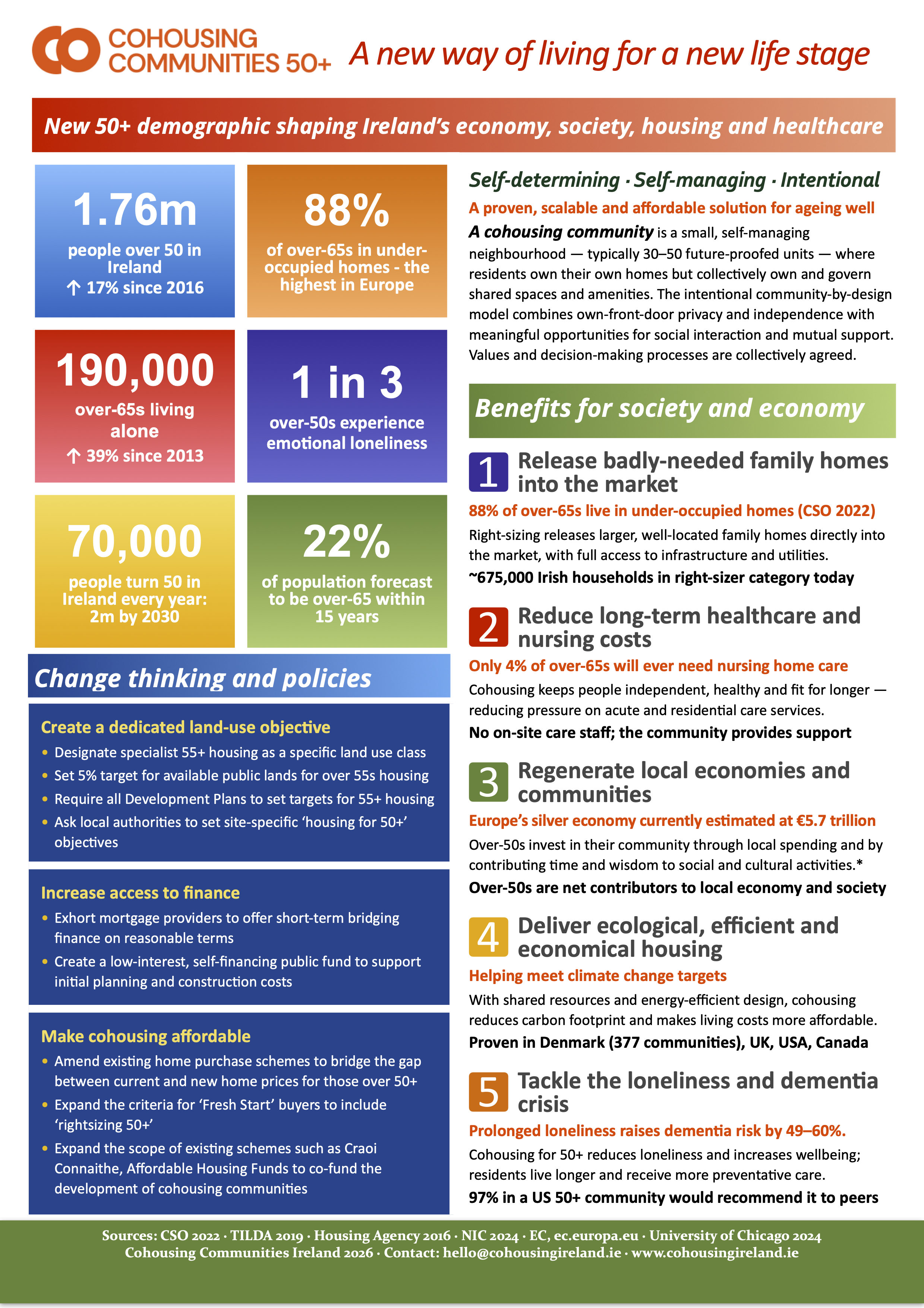
Every year, 70,000 of us in Ireland turn 50, joining the 1.76 million others already over that age. Many of us live in homes that are too large, too costly to run, difficult to manage and often in the wrong location. We want to plan ahead for our future housing needs, often too aware of the avoidable crises our own parents went through.
-
Standard apartments, poorly located retirement villages or supported housing don’t meet our needs – as we are typically active, healthy 50+ people, often still working.. We are looking for easy to run homes in vibrant communities AND for many, to create a financial cushion for our later years. Cohousing communities fill this gap and often release badly needed larger homes into the market.
Common Features
While each community is different, reflecting the preferences and priorities of the founding group as well as the site conditions, they tend to have the following common features:
Size of community: About 25-45 households. Likely to be apartments in urban areas, houses + apartments in more rural areas.
Layout of Homes: Typically 60-95 square meters, comprising kitchen, dining/living areas, 1 or 2 bedrooms, 2 x bathrooms (1 ensuite), spacious balcony.
Indoor shared amenities: Common room where the community can cook and eat together, lounge area for socialising/classes. Options can include guest studio(s) which can, in time, accommodate carers if/when needed, gym, co-working space/meeting room, repair workshop.
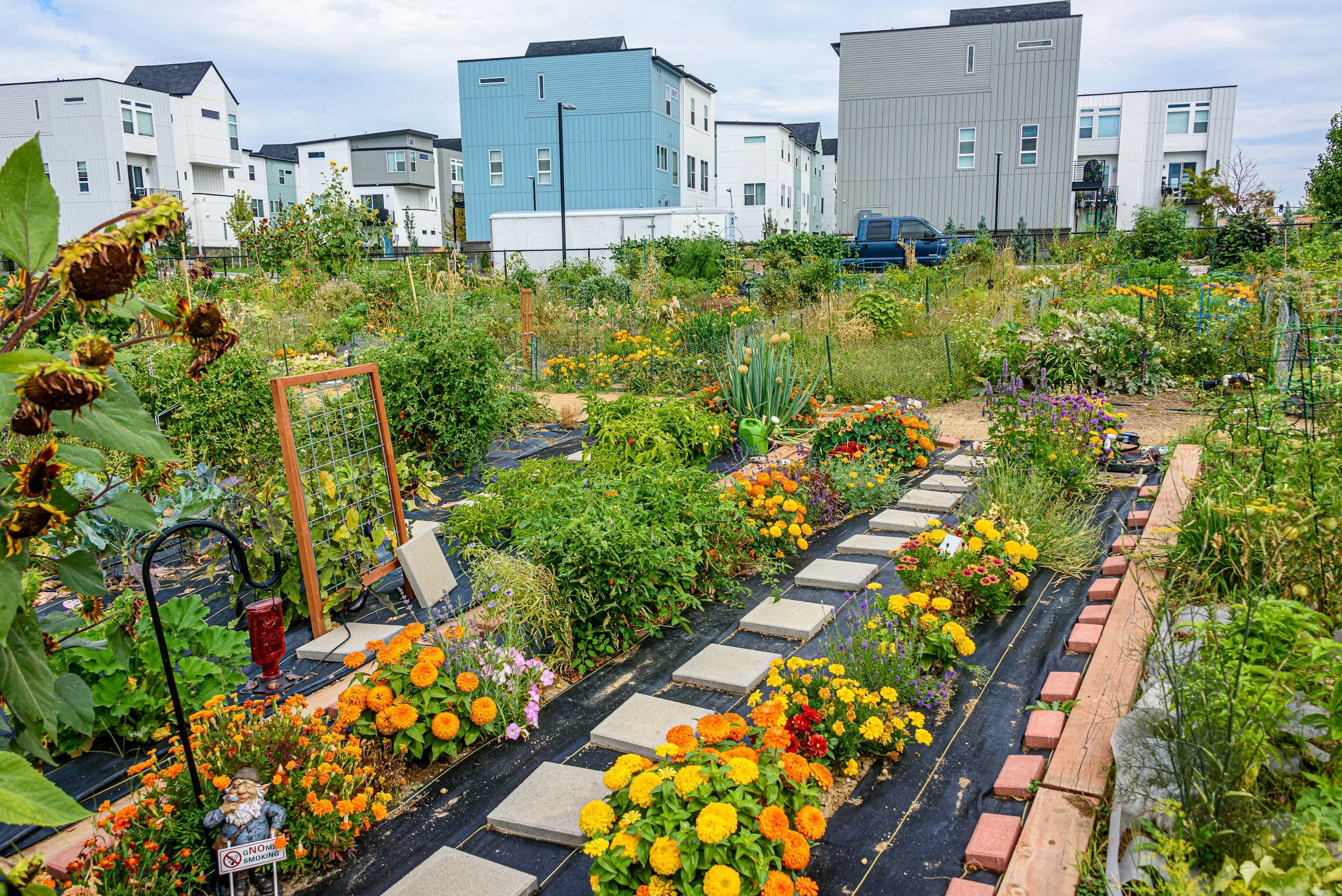
Outdoor amenities: Landscaped gardens, communal seating, barbeques, bike sheds. Additional options can include gym workout area, small allotment areas.

Is this for me?
Living in cohousing communities for people aged 50+ offers a blend of independence and social connection that enhances quality of life. The most commonly cited benefits among people living in such communities include:
It can be fun, sociable: There is always something to do when you are looking for company. Typically communities cook and eat together on a regular basis, but no pressure to join. They form film and book clubs, art and language classes, have cycling groups. The community share opportunities for things to do - a hill walk the next weekend, going to a film, bridge, cooking class.
Good Neighbours: Neighbours form close-knit networks that reduce loneliness and foster a sense of belonging. Need your plants watered while you are away, your cat fed, a pick up after a hospital procedure - that’s what good neighbours do.
Shared resources: There are plenty of opportunities for reducing our carbon footprint and lowering living costs by sharing expensive equipment.
Ageing in place: Communities are designed for accessibility and mutual assistance, helping people to stay independent for longer.
Safe and secure: Residents look out for one another, creating a safe and supportive environment.